
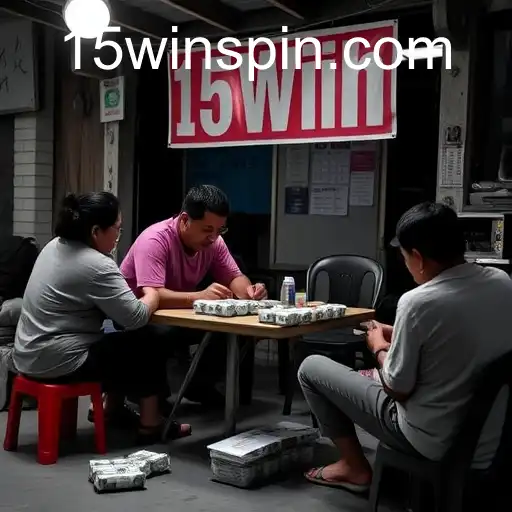
15win | Understanding the Intricacies of Jueteng: A Closer Look at the Economic and Societal Impacts
15win’s Exploring the world of Jueteng, its influence on Philippine society, and what the future holds for this contentious form of gambling.
Understanding the Intricacies of Jueteng: A Closer Look at the Economic and Societal Impacts
Jueteng, a number game popular among many Filipinos, can be seen as both a societal bane and a critical component of local culture. Renowned for its simplicity and accessibility, this form of illegal gambling has been deeply embedded in the socio-economic landscape of the Philippines. It is a complex web involving government officials, bet collectors, and regular individuals hoping to strike it rich with a small wager. This article delves into the mechanics of Jueteng, evaluating its impact on society, particularly with regard to the controversial platform '15win'.
The Mechanics of Jueteng
At its core, Jueteng is a numbers game that requires players to select a combination of digits. A key illustrated advantage of Jueteng is its simplicity. Taking place twice a day, individuals can place bets as low as one peso, making it accessible to all segments of society. The game involves small balls marked with numbers, drawn from containers to announce the winning combination. Its informal nature makes Jueteng highly adaptable, a characteristic that appeals to an extensive demographic in the Philippines.
Why Jueteng Persists
Despite numerous government crackdowns, Jueteng continues to thrive for several reasons. Its deeply ingrained nature in local communities, coupled with the potential for significant winnings from minimal investments, makes it considerably appealing. Moreover, the operations often involve key figures within the community and governance, asserting a level of protection and continued existence.
Attempting to stamp out Jueteng involves navigating a complex social and economic landscape. For many locals, it represents an opportunity - albeit a risky one - for financial gain. Many bet collectors earn a living through its operations, with networks extending from urban areas to rural communities. This intricate web, fueled by financial inducements for enablers and collectors, underscores Jueteng's embedded nature within Filipino culture.
Introducing '15win': A Modern Face of Jueteng
With technology becoming ubiquitously integrated into daily life, Jueteng has found a new platform in online betting systems such as '15win'. This online counterpart has become a topic of significant debate and controversy. It capitalizes on the anonymity and accessibility offered by digital platforms, thereby broadening Jueteng's reach beyond traditional boundaries.
The Role of 15win in Modern Gambling Dynamics
15win facilitates the placement of bets through online channels, which, despite being illegal, continue to gain popularity. The ease of access through mobile and internet devices has contributed to the proliferation of this modern adaptation of Jueteng. Moreover, it offers an enhanced level of convenience and perceived safety from legal repercussions due to its digital nature.
Socio-Economic Implications of Jueteng
The economic implications of Jueteng are vast, affecting multiple facets of Filipino life. It is more than just a game; it is a micro-economy that provides livelihoods for many. Bet collectors, coordinators, and even some corrupt officials benefit financially, creating a shadow economy in which money continually circulates outside the bounds of formal financial systems.
Further complicating the issue are the accompanying societal challenges. Jueteng has been linked to corruption and governance issues within the region, often involving official protection in exchange for financial kickbacks. This integration blurs the line between legality and criminality, presenting significant hurdles in governance and law enforcement.
Addressing the Challenges
Tackling the complex issue of Jueteng requires acknowledging both its roots and its modern adaptations like 15win. Policymakers face the challenging task of mitigating its negative impacts while considering the economic reliance placed on it by so many communities. Striking a balance between enforcement and offering alternative solutions is critical in addressing the socio-economic challenges posed by Jueteng operations.
Various initiatives and reforms have been suggested, including the introduction of legal alternatives and community education programs aimed at providing viable economic alternatives to those reliant on Jueteng's lucrative allure.
Future Pathways
As the world continues to advance technologically, Jueteng's resilient nature and ability to adapt may pose even greater challenges in the future. With platforms like 15win, there is a clear need for comprehensive legislation and consistent law enforcement to stem this tide. However, addressing the deeper, ingrained societal reliance on such gambling activities remains crucial in offering a pathway forward.
The story of Jueteng is one of survival and adaptation, reflecting broader economic and societal narratives within the Philippines. This complex gambling network shows no immediate signs of fading, underscoring the pressing need for both legislative action and socio-economic development to usher in substantive change.
